Concrete Crack Repair: Which Cracks Are Cosmetic and Which Are Structural
Almost every concrete slab cracks eventually. Concrete shrinks as it cures, expands and contracts with temperature, and responds to soil movement beneath it. Most of these cracks are cosmetic and cheap to fix. A smaller number signal something more serious. Knowing the difference helps San Diego homeowners and property managers decide whether a simple patch will do or whether it is time to call a professional.
Why Concrete Cracks
Concrete is strong in compression and relatively weak in tension, so it cracks when pulled or stretched. Common causes include drying shrinkage during curing, thermal expansion and contraction, poorly compacted soil, tree roots, water erosion beneath the slab, heavy loads and a lack of control joints. Control joints are shallow cuts intended to guide where the concrete cracks, so cracking along these lines is normal and expected.
Cracks That Are Usually Cosmetic
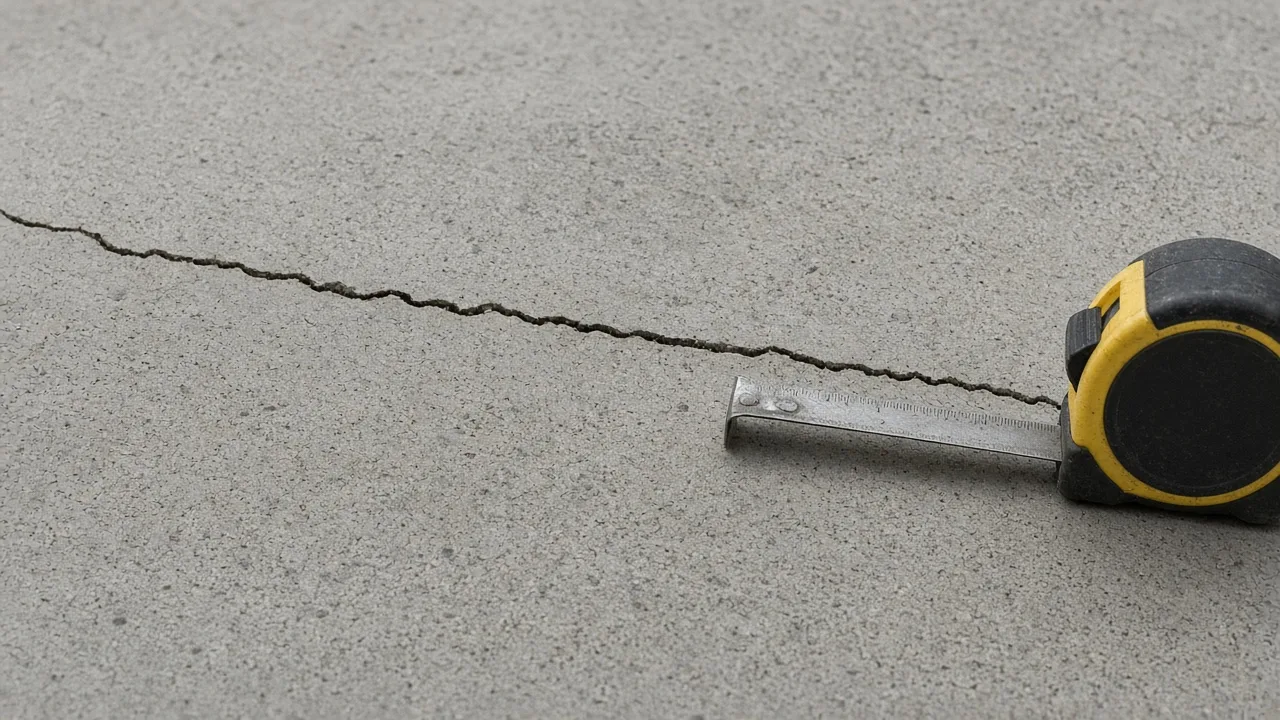
- Hairline cracks. Thin cracks, often less than about one-sixteenth of an inch wide, that appear in the first weeks and months after a pour.
- Shrinkage cracks. Short, shallow cracks that form as the surface dries, often in a random or spider-web pattern.
- Cracks along control joints. These are doing their job and rarely need more than sealing.
These cracks do not usually affect the strength of the slab, but they can let water in. Sealing them prevents moisture from reaching reinforcing steel and the soil below.
Warning Signs of Structural Problems
- Cracks wider than about a quarter inch. Wide cracks often point to settlement or heavy movement.
- Uneven surfaces. If one side of a crack sits higher than the other, the slab has shifted or heaved.
- Cracks that keep growing. Mark the ends with a pencil and date them. If the crack lengthens or widens over weeks or months, movement is ongoing.
- Diagonal or stair-step cracks in foundation walls. These can indicate differential settlement and should be assessed promptly.
- Cracks accompanied by doors that stick, gaps around windows or sloping floors. These point to a foundation issue rather than a surface one.
Any crack in a structural element, such as a foundation wall, retaining wall or elevated slab, deserves a professional opinion, especially if it is accompanied by water intrusion.
Repair Methods for Minor Cracks
For narrow cracks in driveways, patios and walkways, a flexible sealant or a polyurethane or epoxy filler is usually enough. The basic steps are:
- Clean the crack of dust, loose material and vegetation using a wire brush and vacuum or compressed air.
- Apply a backer rod in deeper cracks to control the depth of the filler.
- Fill with a sealant rated for concrete and outdoor exposure, tooling it smooth.
- Allow it to cure fully before foot or vehicle traffic.
Choose a flexible filler for cracks that move with temperature changes and a rigid epoxy for cracks that need to restore strength. Using the wrong product is a common reason repairs fail.
Repair Methods for Larger Problems
Wider or structural cracks may call for epoxy injection, which bonds the two sides of a crack together, or for stitching with metal staples to hold the slab in place. Settled slabs can sometimes be raised through slab jacking or polyurethane foam injection, which fills voids under the concrete and lifts it back into position. Where the soil or drainage is the underlying cause, the repair must address that first, or the problem will return.
Prevent New Cracks
Good drainage is the most effective prevention. Direct downspouts and irrigation away from slabs, keep soil around foundations from drying out and flooding, and keep large tree roots at a distance. Sealing the surface every few years protects against moisture, and replacing damaged expansion joint material stops water from reaching the soil underneath.
When to Call a Professional
If a crack is wider than a quarter inch, is getting bigger, runs through a foundation or retaining wall, or is accompanied by sloping floors or sticking doors, get an assessment from a qualified concrete contractor or structural engineer. A professional can determine the cause and recommend a repair that lasts, which is often cheaper than repeated patching.
This article is general information and not a substitute for an on-site inspection.
/div>